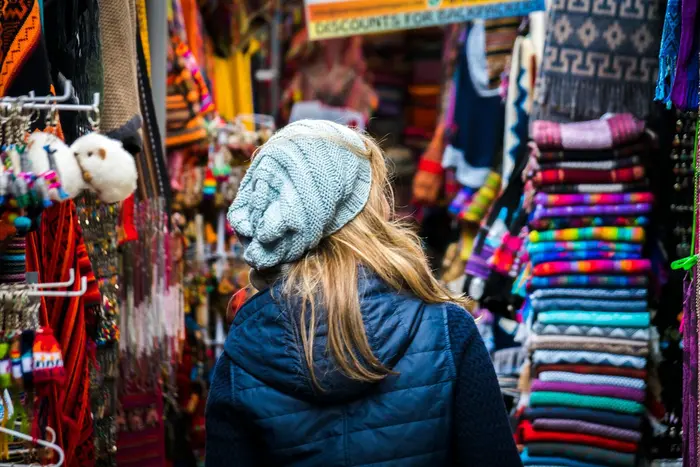
Cusco is full of shops and stalls selling "alpaca" — sweaters, scarves, hats, gloves. The problem is that not everything labeled alpaca actually is, and plenty of travelers end up paying fine-fiber prices for polyester. Here are a few simple tricks you can use on the spot, no special equipment needed.
1. Touch is your best tool
Real alpaca feels soft but with some weight to it — it's not as light or "slippery" to the touch as acrylic or polyester. If a garment feels very shiny, almost plastic-like, or too uniform, it's probably synthetic or a blend with very little real fiber.
2. Pay attention to price (carefully)
A 100% alpaca garment, especially "baby alpaca" (the finest fiber, from the animal's first shearing), can't be cheap — shearing, spinning, and weaving is a costly process. If a "baby alpaca" hat costs the same as one from any generic craft fair, that's a red flag.
- Very low price + synthetic shine = probably not alpaca.
- Reasonable price + soft, matte texture = much more likely to be the real thing.
3. The burn test
Serious vendors at markets like San Pedro will often offer to do this test themselves: they burn a loose thread from the garment. Animal fiber (alpaca, wool) burns slowly, smells like burning hair, and leaves ash that crumbles easily between your fingers. Synthetic fiber melts, smells like burning plastic, and forms a hard little ball.
Don't do this yourself without permission — but if the seller offers it without hesitation, that's a good sign they trust their product.
4. Buy from places with traceability
Artisan markets and cooperatives tend to be more reliable than generic tourist shops downtown, because you can often see where the fiber comes from and even meet the person who wove the piece.
5. One extra tip: "alpaca" vs. "alpaca blend"
Always check the label. It's common — and honest — for a product to say "alpaca blend" when it combines alpaca fiber with another material to lower the price; that's not a scam, as long as it's stated clearly. The problem is when it says "100% alpaca" and it isn't.
In short
Trust your hands: if something feels too shiny, too light, or too "perfect" for the price being asked, it's probably not real alpaca. And when in doubt, ask — good sellers are happy to explain.
Want us to point you toward trustworthy markets and workshops during the tour? Ask your guide — it's part of the conversation along the way. Book your Free Walking Tour here.